


Jinan Huachen Industrial Co., Ltd. was established in 1998. The company adheres to the concept of diversified management, follows international trade rules, and is mainly engaged in import and export business and agency business. At present, the pneumatic and hydraulic products, large hydraulic machinery, food processing and packaging machinery, auto parts, hardware accessories, etc. we produce are sold to more than 20 countries and regions including the United States, Australia, South America, the Middle East, and South Asia.
All products we produce undergo multiple quality inspections to ensure that all products are qualified. All cylinders are chrome-plated, polished, and the individually heat-treated shafts can extend the life of the cylinders.
Our company has 26 years of experience in the industry. We have been deeply involved in this industry and continuously improved our production level and upgraded equipment. We have more than 400 CNC machine tools of various types.
High-quality service
You can consult us at any time for any questions before or after sales, and our professional team will reply you within 2 hours and provide you with professional advice.
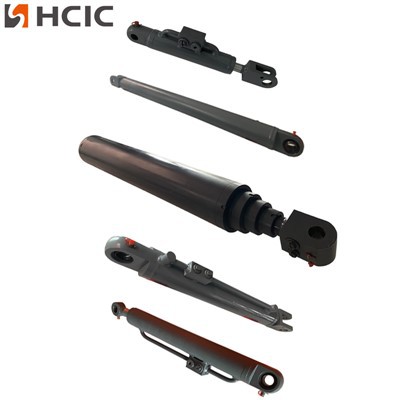


A double acting hydraulic cylinder has dual inlet connections for the hydraulic fluid. Just like a single-acting hydraulic cylinder, one inlet will allow fluid to flow into the cylinder to extend the piston rod outwards to perform the designed work. Double acting hydraulic cylinders provide a bit more flexibility when controlling piston extension and retraction. It is easy to move the piston back and forth and ensure the plunger can be fully retracted to its original position. In addition, work can be performed with double-acting cylinders somewhat faster, since you do not have to wait for gravity or a spring to retract the piston.
One of the primary advantages of double acting hydraulic cylinders is their speed and efficiency. With hydraulic fluid acting on both sides of the piston, these cylinders can extend and retract within a shorter time frame than single-acting cylinders. This rapid movement translates into enhanced productivity and quicker task completion.
Double acting hydraulic cylinders are more likely to be ISO-compliant for industries with strict quality and safety standards. Their bidirectional operation and precise control align with the requirements of many regulatory bodies, ensuring that machinery meets industry standards.
The barrel of the cylinder is the body that holds all the components inside of it. It acts as the chamber in which the piston rod moves in and out. This facilitation of movement ultimately is converted into mechanical energy that is transferred to the parts of the machine that require the energy. The barrel must be made up of strong materials to avoid deforming, as compressing the chamber within will reduce the amount of pressure that can be converted, or even hinder the movement of the piston rod. Cylinder Barrels are usually made up of materials that are strong and durable. The material it's made of typically depends on the intended application of the system. Steel is preferred for heavy-duty work due to its ability to withstand high pressure, whereas aluminum is chosen for work where portability is key.
Found at one end of the cylinder, the cap is crucial for containing the pressure within. Without it being tightly sealed, it would lose pressure and machine functionality. Aside from that, its presence also supports the structure of the barrel. They are attached in different ways, but the predominant methods are through welding or threading. Welded caps are permanently fused to the barrel, ensuring a strong, leak-proof connection. Alternatively, threaded caps are screwed onto the barrel. This less-secure method is preferred by those who have the interest and/or capacity to disassemble and/or maintain the component.
Seals come modified for each component within and without the cylinder, including piston seals, rod seals, wiper seals and O-rings. Seals can be modified to serve several purposes, the most important being preventing leakage and keeping contaminants out.
The question of how much room you have for your double acting hydraulic cylinder is an important one. You wouldn't choose a cylinder that has a collapsed height of 16.5cm (6.5 in) for a space that only has 12.7cm (5 in). There are purpose-designed cylinders made for jobs in confined spaces.
If your load needs holding in place while you perform your job, a double acting hydraulic cylinder with load holding is a safe choice. Cylinders that hold your load, eliminate the time-consuming process of cribbing. There are two different types of cylinders that can be used for load holding. Lock nut cylinders which utilize mechanical support, and cylinders with check valves.
Each double acting hydraulic cylinder is built to lift a certain capacity. There are general-purpose designs, which are your "basic" options, and also high tonnage cylinders that have a capacity of up to 1000 tons. Like cylinder stroke, the 80% rule also applies to tonnage. Manufacturers always list their maximum weight capacity as a safe limit. However, good practice with double acting hydraulic cylinders encourages users to only go to 80% of the manufacturer's limit.
Many hydraulic failures occur because of hydraulic oil contamination. This is important to prevent damage to your system and components. If hydraulic oil is contaminated, it must be thoroughly cleaned as soon as any contamination has been found. It is also best to fit high-efficiency filters and change them when necessary. If a filter has a build-up of debris, a differential pressure gauge can be installed to give you a good indication as to when they need to be changed. This means that you will be preventing a bypass, where the oil flows through the system unfiltered.
As with other hydraulic components, if the risk of downtime is not an option, it is always a good idea to hold another cylinder(s) either as a 'critical spare' or that you can alternate usage between regularly. This break between uses keeps the cylinders in good shape, despite possible particle contamination and harsh operating conditions. It is also wise to undertake maintenance on these cylinders when they are removed from the system, so that they can be repaired if necessary. Before re-assembling a cylinder, you may want to first replace all the seals. Inspection of the cylinders may also give you an idea as to the condition of the entire system. For example, if there is a consistent varnish throughout your system, it could mean that the oil temperature is too high, and it needs to be altered.
We currently have a R&D center in Jinan with 16 technical engineers in R&D teams. There are 20 hydraulic engineers in our company, more than 600 employees, 3 hydraulic cylinder production workshop, 1 power unit production workshop.
